
 2026-01-11
Design Thinking Coaching: Empowering Creativity through Innovative Problem-Solving Techniques
Ever wondered how to unlock latent creativity and tackle complex problems with a fresh, innovative lens? In an era defined by rapid flux, conventional logic often hits a dead end. A landmark "IBM" study revealed that 85% of CEOs prioritize creativity as the ultimate leadership trait for navigating modern business complexities. This is where Design Thinking Coaching steps in—not just as a methodology, but as a transformative catalyst.
This guide navigates you through how this coaching rewires the human mindset, providing the scaffolds to transform daunting challenges into tangible, creative breakthroughs.
Design Thinking as a Coaching Methodology
Design Thinking is a quintessentially human-centric framework engineered to deconstruct complexity and spark breakthrough innovation. It transcends mere problem-solving by harmonising deep empathy with iterative experimentation, ensuring solutions are not only viable but deeply resonant with the human experience.
The lineage of this philosophy began with Herbert A. Simon’s 1969 seminal work, "The Sciences of the Artificial", which later evolved through Robert McKim’s 1973 exploration of visual cognition. However, the true paradigm shift arrived in the 1980s via Rolf Faste at Stanford University, who adapted these concepts into a versatile creative methodology for the commercial world. David M. Kelley further institutionalised this and the design firm "IDEO", cementing its status as a strategic business imperative.
Academic maturity followed with Peter Rowe’s 1987 systematic analysis of architectural problem-solving and Richard Buchanan’s 1992 landmark paper on "Wicked Problems", which positioned design as a powerful tool for addressing multifaceted human challenges. Today, it remains at the forefront of academic and professional discourse.

Integrating Design Thinking into Coaching: The Role of the Coach and the Coachee
Infusing coaching with Design Thinking pivots the engagement from passive advice-taking to creative self-mastery. Here, the coach sheds the "expert" persona, acting instead as a facilitator of a designer-led journey. The coachee is empowered to architect their own bespoke solutions, driven by a spirit of radical curiosity.
Rather than providing a fixed map, the coach equips the coachee with a compass and the navigational agility to traverse uncertainty. This methodology encourages individuals to re-examine their challenges through a "designer’s lens," transmuting obstacles into opportunities. Ultimately, this synergy fosters a resilient mindset, enabling the coachees to navigate future complexities with sustainable, innovative confidence.
Understanding the Principles of Design Thinking
The efficacy of this approach rests on three transformative pillars:
- Empathy: The foundational discipline of immersing oneself in the user’s world to uncover authentic needs and motivations.
- Collaboration: Harnessing the cognitive diversity of multidisciplinary teams to enrich ideation and ensure holistic outcomes.
- Experimentation: Prioritising action over theoretical deliberation through rapid prototyping and real-world testing to refine solutions iteratively.
How Coaching Operationalises Creativity and Problem-Solving?
Coaching catalyzes cognitive agility, refining the individual’s capacity to innovate by targeting the psychological and tactical drivers of progress:
- Fortifying Creative Confidence: By deconstructing the stigma of failure, coaching instils the professional audacity to experiment with disruptive solutions.
- Broadening Cognitive Horizons: Through incisive, provocative inquiry, the coach helps the coachees transcend tunnel vision, revealing untapped strategic opportunities.
- Skill Refinement: The process hones critical faculties—analysis, diagnostic thinking, and powerful questioning—enabling architecting high-impact solutions.
- Sustaining Intrinsic Momentum: Coaching ignites the internal drive required to maintain creative persistence when navigating systemic friction.
- Strategic Pragmatism: It ensures that innovation is not merely conceptual but viable, guiding coachees to synthesise complex variables into functional, real-world impact.
Industry titans have institutionalised this approach to maintain their competitive edge:
- "Microsoft": Integral to its cultural metamorphosis, coaching has fostered a "Growth Mindset", empowering teams to tackle challenges through a lens of continuous evolution.
- "General Electric": Long utilised coaching to cultivate adaptive leadership, fostering an organisational capacity for foresight and unconventional problem-solving.
Design Thinking Coaching Tools and Techniques
These instruments are essential for transmuting abstract empathy into tangible, human-centric interventions:
- Empathy Maps: A visual diagnostic designed to decode the user’s psyche. By mapping thoughts, feelings, and behaviours, coaches help uncover the latent drivers essential for authentic innovation.
- "How Might We?" (HMW) Framing: A linguistic pivot that reframes rigid constraints into expansive opportunities, shifting the focus from "what is" to "what could be."
- Brainstorming Techniques: Techniques such as "Crazy Eights" bypass the analytical filter, encouraging a prolific flow of daring, uninhibited concepts.
- Prototyping Tools: Low-fidelity tools—from physical sketches to role-playing—transform abstract ideas into tangible artefacts. The mantra is "fail fast to learn faster," accelerating the feedback loop.
- Testing Methods: The reality-check phase, where prototypes encounter actual users. Through ethnographic observation and direct feedback, solutions are refined based on lived human experience.
- Online Courses and Resources: Curated digital resources and self-directed learning paths that deepen the practitioner’s mastery and ensure the continuous evolution of their design-led toolkit.
Design Thinking Stages within Coaching Sessions
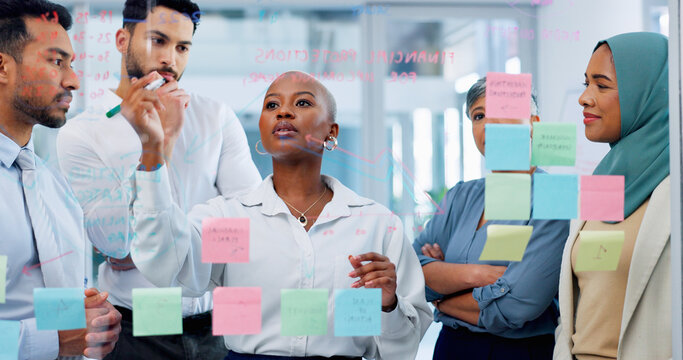
Design Thinking is a non-linear, dynamic engine for problem-solving, structured around five core disciplines that prioritise human experience to engineer breakthrough solutions:
1. Empathise
This phase demands radical immersion. It is a deep-dive discovery into the stakeholder’s psyche to uncover emotional drivers and latent pain points. By viewing the world through the user’s lens, coaches identify the "unmet needs" that serve as the bedrock for genuine innovation.
2. Define
Raw insights are synthesised into a singular, actionable focus. Diagnostic precision is vital here; by distilling the complexity into a "Wicked Problem" statement, the coach ensures that the creative energy is targeted at the root cause rather than superficial symptoms.
3. Ideate
A launchpad for uninhibited divergence. The goal is to generate a high volume of diverse strategic avenues without the paralysis of immediate critique. It encourages "Blue Sky Thinking" to explore unconventional possibilities before distilling them into high-potential concepts.
4. Prototype
Abstract theories are transmuted into tangible, low-fidelity artefacts. Whether through rapid sketching or role-playing, this stage is about manifesting ideas quickly to bridge the gap between thought and physical reality.
5. Test
The moment of truth where prototypes meet real-world friction. This iterative feedback loop exposes structural flaws and validates strengths, ensuring the final intervention is not just theoretically sound but functionally superior and resilient.
Leveraging Visual and Interactive Tools to Catalyse Creativity
Visual frameworks are the cognitive accelerators of Design Thinking. By engaging the brain's spatial faculties, these tools transform abstract intentions into optimisable realities.
Their strategic value lies in:
- Cognitive Mapping: Visuals bypass verbal density, revealing hidden systemic correlations and providing a panoramic perspective that text-heavy discourse often obscures.
- Mnemonics and Retention: Concepts anchored in imagery or tactile interaction possess higher cognitive "stickiness," making them easier to recall and execute under pressure.
- Dismantling Psychological Barriers: Interactive tools introduce a "Serious Play" element. This lowers the stakes of failure, encouraging the intellectual audacity required for experimental breakthroughs.
- Cross-Functional Alignment: Visuals serve as a universal cognitive language, bridging the gap between diverse expertise and ensuring multidisciplinary synergy.
- Objective Scrutiny: Externalising an idea onto a map or model allows it to be critiqued and refined as a distinct entity, moving the conversation from personal opinion to functional optimisation.
Applications of Design Thinking Coaching
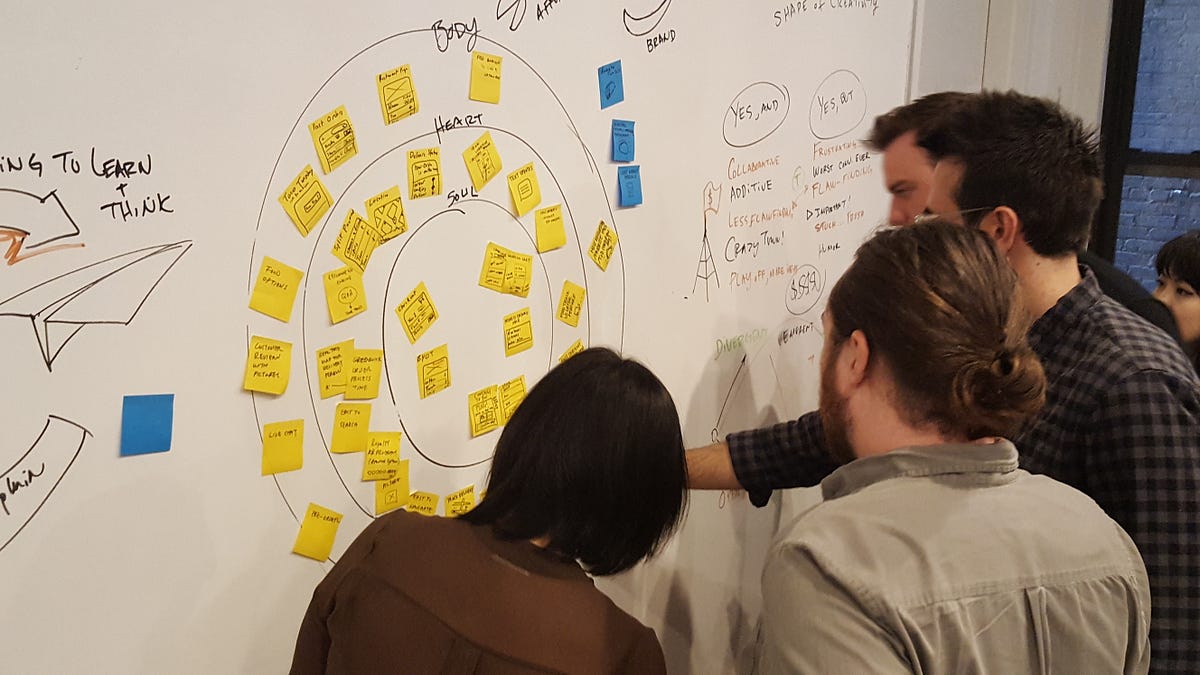
Design Thinking transcends product development; it is a sophisticated coaching catalyst that empowers individuals to navigate life’s systemic complexities. By internalising these methodologies, practitioners evolve from passive problem-solvers into proactive architects of their own professional and personal trajectories.
1. Navigating Complex Personal and Professional Challenges: A Practical Example
Rather than prescribing static advice, Design Thinking Coaching installs a dynamic framework for tackling multi-dimensional friction. It shifts the paradigm from seeking "the right answer" to "designing a viable path," fostering strategic agility across all life domains.
2. Cultivating a Growth and Innovation Mindset
A Growth Mindset—the conviction that capability is forged through iterative effort—is the core engine of this approach. Design Thinking Coaching institutionalises this philosophy through several cognitive shifts:
- Fueling Radical Curiosity: It provokes a constant interrogation of the status quo, encouraging coachees to explore obscured horizons and seek deeper intellectual insights.
- Reframing Failure as Strategic Data: By championing the "fail fast, learn faster" ethos, coaching de-stigmatises setbacks. Errors are transmuted into essential data points for iterative refinement.
- Mastering Ambiguity: Coachees are trained to thrive within uncertainty. This builds the psychological resilience required to maintain creative momentum even when the roadmap is obscured.
- Architecting Self-Reliance: By mastering design mechanics, practitioners develop the internalised confidence to innovate autonomously, ensuring they are future-proofed against subsequent challenges.
- Standardising Experimentation: It instils a habitual inquiry—"What if?" and "How might we?". This experimental pulse is the hallmark of continuous personal and professional evolution.
Final Thoughts
Design Thinking Coaching is less a toolkit and more a strategic compass for an accelerating world. In an era defined by volatility, creativity has transitioned from an elective luxury to a fundamental necessity for survival and growth. Embracing this journey does more than resolve immediate friction; it unlocks latent potential, providing the requisite tools to transmute abstract vision into tangible, impactful reality.
This article was prepared by trainer Adnan Al-Qadi, an ICTM certified coach.